Part One of the Felids & Friends felid-facts series.
All cats are descended from a single remote ancestral species, and the family resemblance runs deep. Most cats, wild and domestic, carry 38 chromosomes. The puma — native to North America — purrs just like the domestic cat. Whether it weighs six pounds or six hundred, a cat is a cat.
The Same Hunter, Different Sizes
All cats, big and small, share the same core hunting behavior: they stalk, they use ambush, and they close the distance with a short burst of speed to intercept prey. Most cats, big and small, kill with a precise bite to the back of the neck. The tabby batting a toy across your floor is running the exact software a leopard uses in the canopy — the same stalk, the same freeze, the same explosive pounce.
Built for the Hunt: Anatomy
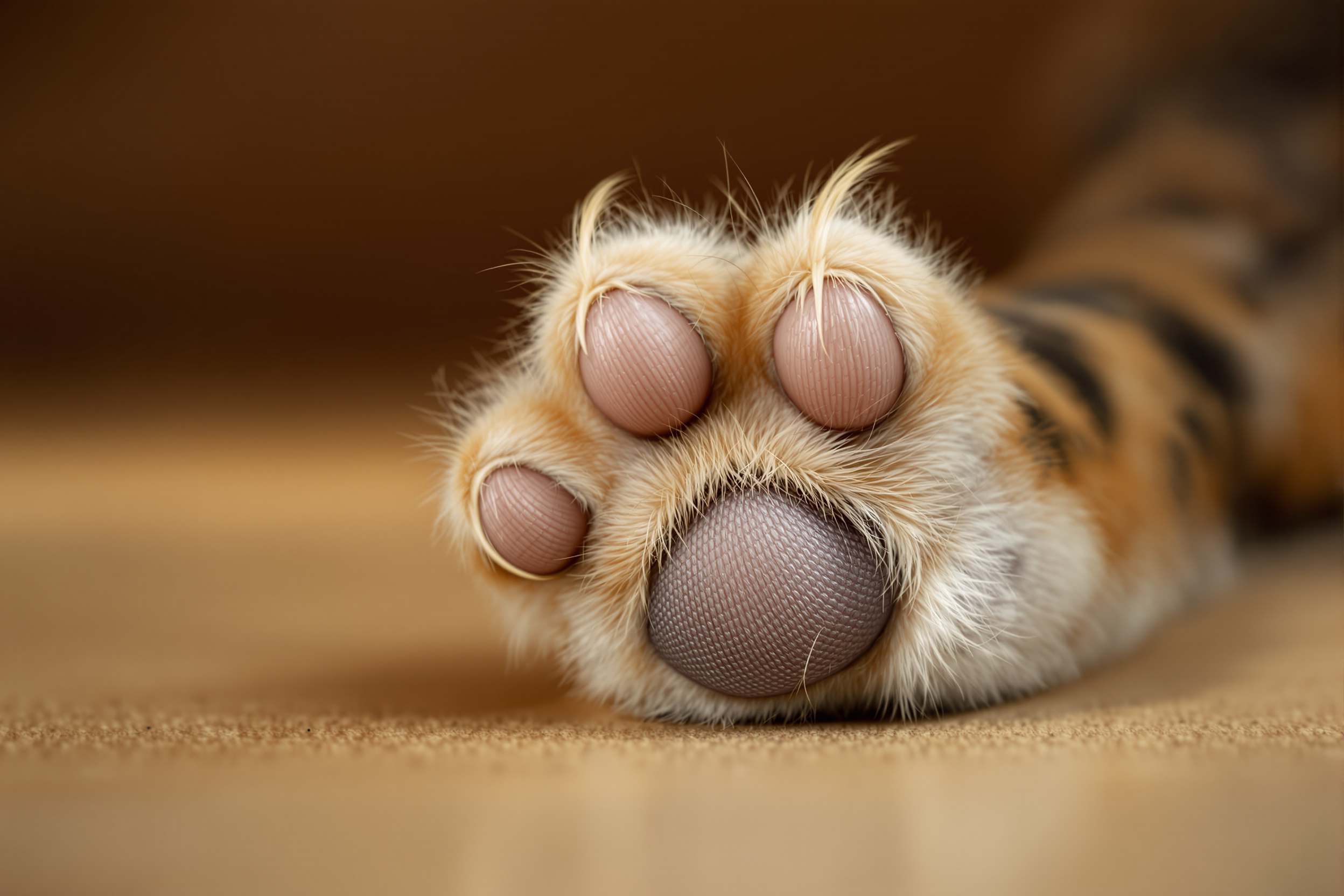
Look closely at any cat and you'll see the hunter in its hardware:
- Toes. All cats have five toes on their forepaws and four toes on their hind feet.
- The "thumb" claw. The fifth claw on the front paw acts much like a human thumbnail — the cat uses it for climbing and for holding on to prey.
- Silent feet. Soft pads at the base of each toe let a cat walk in near silence, essential for stalking.
- Retractable claws. Except for the cheetah, which keeps its semi-retractable claws out for traction at high speed, cats sheathe their claws to keep them needle-sharp.
Why It Matters
Understanding how much your companion cat shares with its wild relatives isn't just trivia — it's the foundation of empathy. The impulse to climb, to pounce, to hide and watch, is not misbehavior; it's a tiger's inheritance expressed at a smaller scale. Meet the impulse with scratching posts, climbing space, and play, and you honor the animal for what it truly is.
Continue exploring in Big Cats vs Little Cats, or return to the Dija Know? collection. For the science of wild felids, see the IUCN Cat Specialist Group.