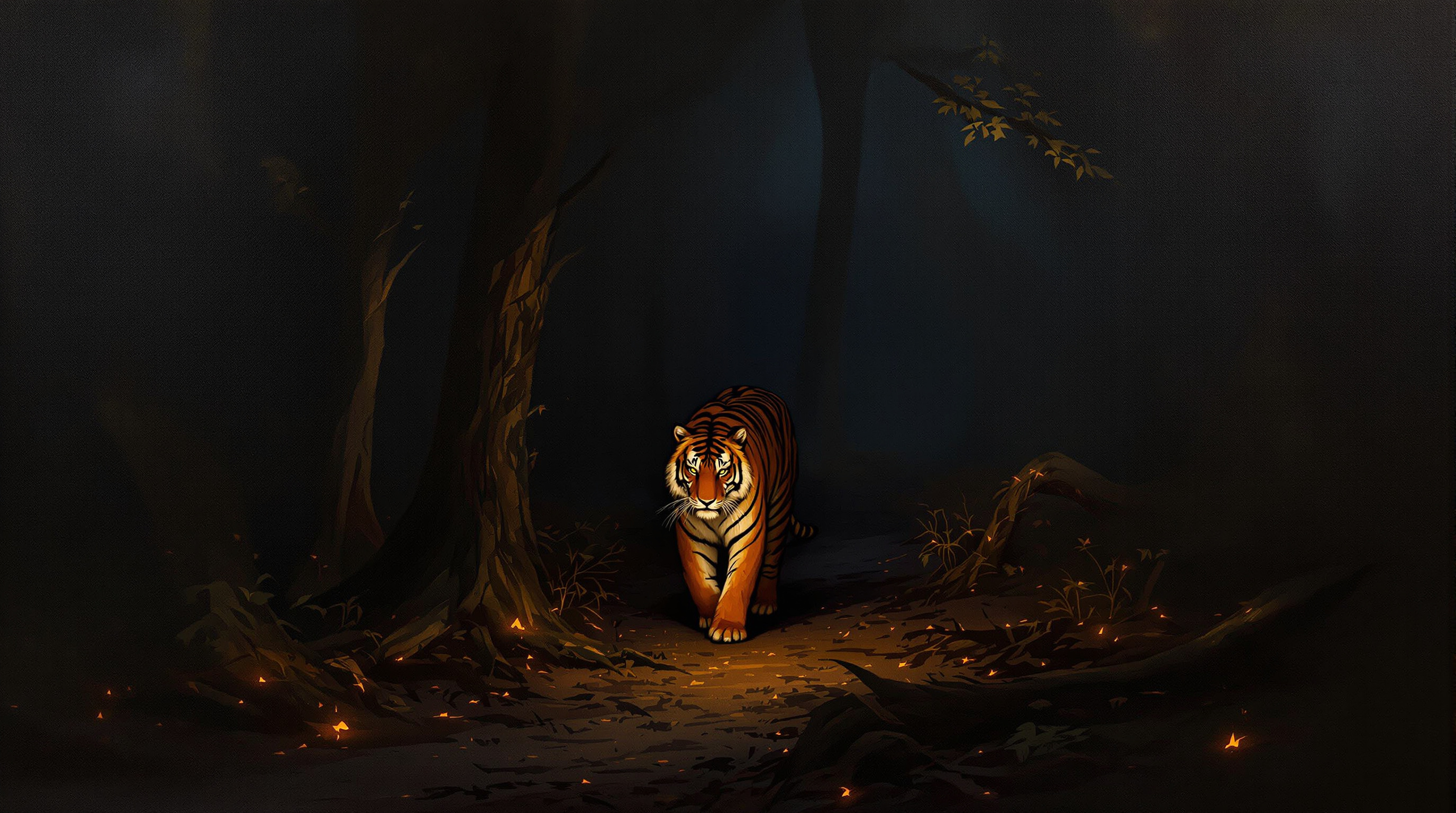
by William Blake (1757–1827) — from the Felids & Friends animal-poems collection.
Few poems capture the awe a great cat inspires better than William Blake's "The Tyger." Written in 1794 for his collection Songs of Experience, it asks, in effect, what kind of creator could make something so beautiful and so terrible at once. Two centuries later, anyone who has stood before a tiger — the orange fire of the coat, the impossible quiet of the step, the sheer engineered perfection of the predator — understands the question in their bones.
Blake pairs the poem with an earlier one, "The Lamb," and the contrast is the whole point: how can the same hand fashion the gentle lamb and the fearsome tiger? He never answers. He simply lets the wonder stand, hammering the question home with the imagery of a forge — furnace, anvil, hammer, chain — as if the tiger were something struck white-hot into being. The rhythm itself pounds like a blacksmith at work.
Tyger Tyger, burning bright,
In the forests of the night;
What immortal hand or eye,
Could frame thy fearful symmetry?In what distant deeps or skies,
Burnt the fire of thine eyes?
On what wings dare he aspire?
What the hand, dare seize the fire?And what shoulder, & what art,
Could twist the sinews of thy heart?
And when thy heart began to beat,
What dread hand? & what dread feet?What the hammer? what the chain,
In what furnace was thy brain?
What the anvil? what dread grasp,
Dare its deadly terrors clasp!When the stars threw down their spears
And water'd heaven with their tears:
Did he smile his work to see?
Did he who made the Lamb make thee?Tyger Tyger burning bright,
In the forests of the night:
What immortal hand or eye,
Dare frame thy fearful symmetry?
Why We Keep It Here
Felids & Friends collected "traditional animal lessons from friends of the past" because a fact tells you what an animal is, but a poem tells you what an animal means. Blake's tiger is real biology transfigured into wonder — the muscle and instinct described on our Big Cats vs Little Cats page, seen through the eyes of awe. That same wonder is what moves people to protect the living animal, and it is why every generation of children who meet a tiger, even in a poem, remembers it.
Read it aloud if you can; "The Tyger" was built for the ear, and its drumbeat only fully lands when spoken. Then carry the question with you the next time you watch any cat, large or small, move through the world with that fearful, effortless grace. Explore more in our Fables & Lore collection.