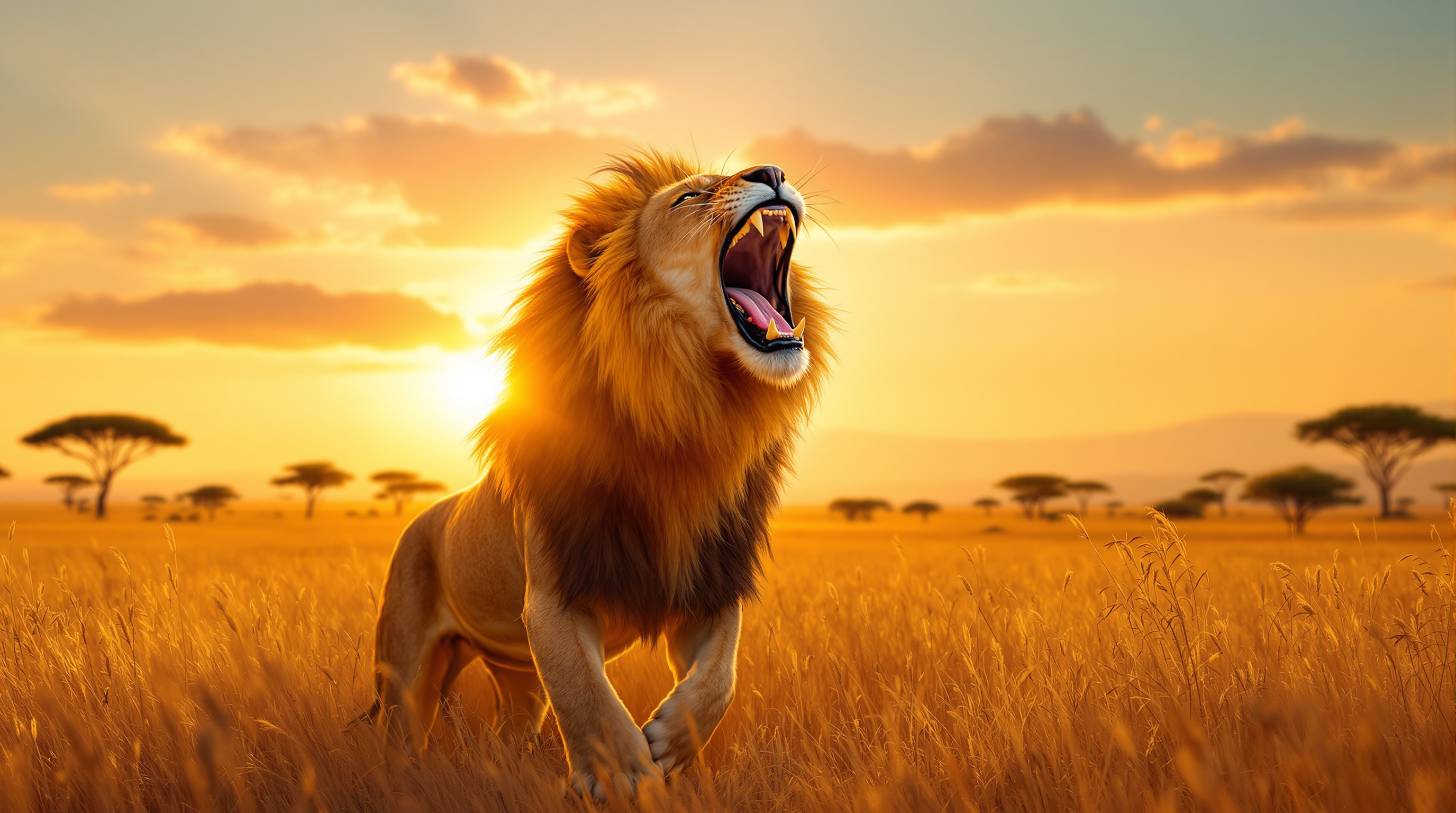
Cats evolved as the predatory hunting animal, equipped with great agility and keen senses. From almost the very start, a kitten of any species shows the instinctive behavior of a hunter — extremely alert to sounds and movement, freezing into rigid stillness and then converting it into a rapid pounce. Every cat, including your own companion, demonstrates the biting and clawing actions needed to bring down and dispatch prey quickly.
What They Share
The domestic cat has the anatomical features and senses of the big cat, scaled down. The stalk, the ambush, the killing bite to the nape, the retractable claws, the night-adapted eyes — all of it is standard equipment across the family. If you've watched a house cat hunt a moth, you've watched a leopard hunt an antelope in miniature.
The Great Divide: Purr or Roar
The single most famous difference between big and small cats comes down to one small structure: the hyoid bone in the throat. In small cats — and, notably, in the puma and cheetah — the hyoid is fully hardened (ossified) and rigidly connected to the skull. That rigid link lets these cats purr continuously, on both the in-breath and the out-breath.
In the true "roaring" cats — lions, tigers, leopards, and jaguars — part of the hyoid is replaced by flexible cartilage. That flexibility, paired with a specialized larynx, gives up the continuous purr but grants something else entirely: the roar, a sound a lion can send more than five miles across the savanna. In short, a cat can purr or roar, but not both.
Size Changes the Game
Size ripples through everything. Big cats need large territories, large prey, and different social strategies — lions are famously the only truly social cat, living in prides, while most others are solitary. Small cats hunt small prey more often and more opportunistically. Yet the underlying template never changes: patient senses, explosive speed, efficient kill.
One Family, Many Forms
From the tiger to the tabby, the cat family is a masterclass in how evolution takes one excellent design and renders it at every scale. To see where each species stands today — many are threatened — consult the IUCN Red List of Threatened Species. Then meet a wild felid living in the United States on our Bobcats in Florida page.