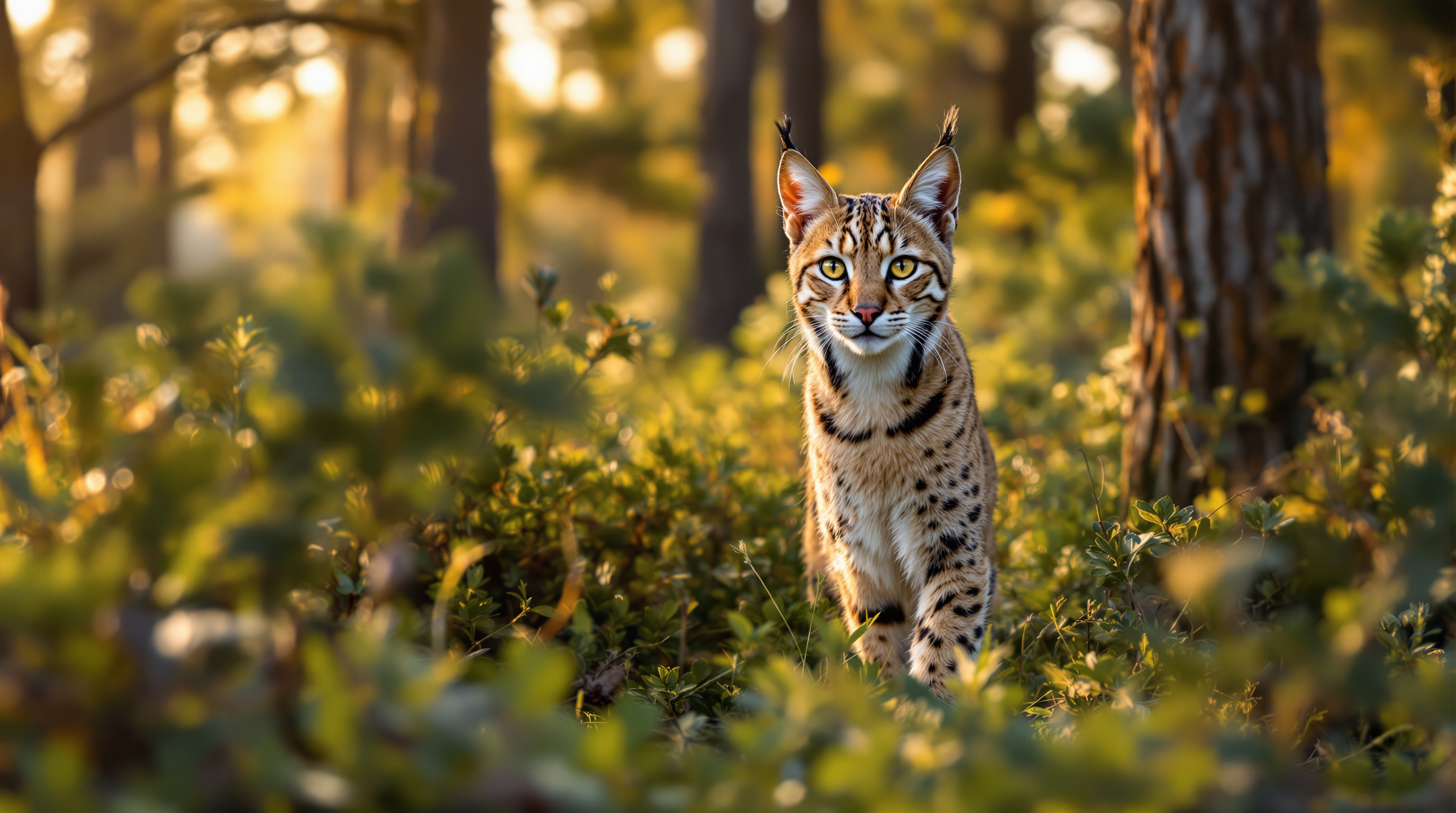
A common question from Floridians is how to avoid mistaking the Florida bobcat for the far rarer Florida panther. It's a fair worry: the two share habitat, and a large bobcat is easily misread as a small panther. Here's how to tell them apart — and why the bobcat deserves a closer look in its own right.
Range and Life
The bobcat (Lynx rufus) is found from southern Canada, throughout the United States, and down to the higher elevations of southeast Mexico. In Florida, the bobcat occurs statewide. It is a solitary, mostly nocturnal creature that may live up to 14 years in the wild, making its home in swamps and forests. As a solitary animal, the bobcat marks its territory with urine, feces, scrapes, and tree scratches placed along the perimeter and within the interior of its range.
Bobcat or Panther?
The bobcat may share its habitat with the Florida panther and has often been mistaken for an immature panther. A few reliable differences:
- Tail. The bobcat's tail is short and "bobbed" — usually under six inches. The panther's tail is long, often nearly two-thirds the length of its body.
- Size. An adult bobcat weighs roughly 15–35 pounds; a Florida panther is a big cat, with males reaching 100–160 pounds.
- Ears and coat. Bobcats often show short ear tufts, facial "sideburns," and a spotted or barred coat. The panther is a uniform tawny brown.
A Member of the Family
Bobcats are members of the cat family, Felidae, and among the most successful wild cats in North America precisely because they adapt so well to varied habitats — including the edges of human development. Unlike the endangered panther, the bobcat is not at risk, but it still benefits from the same habitat that panthers need to survive.
Living Alongside Wild Cats
Seeing a bobcat is a privilege, not a danger; attacks on people are exceedingly rare. Give wild cats space, secure pet food and small livestock, and enjoy the reminder that genuine wildness still moves through Florida's swamps and pine woods. To support the rarer of the two, the Florida Panther Society is a longstanding advocate; learn more on our Wildlife & Conservation page.